Wednesday, 24 April 2019

News and Online Media- 24/04/2019

News and Online Media

Curran and Seaton`s theory
- people who own newspaper own it in order to influence the governance. 


2.0 The significance of issues of ownership and economic factors, including the range of each newspaper’s print and online content

Media theory Curran and Seaton
Argue that media industries follow a capitalist pattern of increasing concentration of ownership in fewer and fewer hands.  
This leads to a narrowing of the range of opinions represented in the pursuit of profit at the expense of quality and creativity.  
Curran and Seaton’s theory relates to PROFIT and Power. 
·         With the concentration of newspaper’s in fewer hands (oligarchies) enables Newspapers to increase profits through increased readership.
·         With the narrowing of choice to few Newspaper groups the owners of the Press groups the Press Barons (see below) or Elites have the opportunity to represent their political perspectives.
·         This applies to the narrow range of political opinions expressed by British Newspapers with a bias to Pro capitalism
·         The reason why Press barons own Newspapers is to achieve status and to wield political power.


right wing- against the immigration

Daily Mail and The Telegraph owned by The Barclay Brothers


Economic factors.
Print Media
·         Historically Print media had a strong editorial heritage with professional standards leading to serious journalism.  
·         This was funded through the cost of the newspaper.
Telegraph- 1.40
Mail- 65p


Telegraph advertisements
- cars
- science
- travel
- education

3.0   The use of online monetization features such as paywalls, subscriptions and games

News Industry Funding


·         Newspapers relied on circulation and advertising for revenue, Tabloid Newspapers had a larger circulation but their working class audiences were less attractive to advertisers so the Tabloids relied more on cover price.
·         Broadsheet Newspapers had smaller circulations and an attractive upmarket audience and relied more on advertising.
Newspapers now have a wide range of funding sources
·         The Daily Mail has a cover price of £ 0.65 which is relatively low in order to boost its circulation.
·         Some Newspapers rely entirely on advertising as they are given away (to boost circulation and attract advertising) for Free such as the Metro
·         The Daily Telegraph retails for £1.40 and applies a Paywall £3.00 per week to generate income
·         The Guardian retails for £2.20 and relies on voluntary donations for online news and now has 800,000 paying supporters

·         Some newspapers gain revenue from advertising space where Print was traditionally more lucrative than online advertising, however with the decline in print sales online is increasingly more important especially as On-line has a global audience.


The revenue of newspapers is mostly generated through the process of circulation.


4.0  The content and appeal of each of the set products and how this is used to target, reach and address different audiences 


The Daily Mail:

Gender: 52.5% female
Age: 58
Lowest demographic for 15- to 44-year-olds. 

As the Daily Mail`s audience is mainly females- 52.5%, the front covers mainly explore stories of females and use celebrity endorsements. For example it uses a rhetorical question `Could you cope with these women`s sticky wellness regimes` and the age of the women on these front covers go into the target demographic of around 58 year olds. Also, the information of the front covers is based on police forces and crimes. It explores information on fashion and outfits therefore this is what mainly the female audience will be interested in. 


Telegraph:

Gender: 53% male, 47% female
Age: 61 


The Masthead and the font of the masthead `The Telegraph` suits the average reader age demographic of 61 year olds readers because the font is in serif which is a more vintage and style of writing. On the front cover of the newspaper it has included news about Theresa May and Brexit deal and politics in general. This would suit the age demographic as the population of the elderly pupil are mostly interesting in serious issues such as politics especially issues around Brexit which is the main focus of Britain`s news. 
ABC1 - skilled and professional people mainly. 


5.0 How audience may interpret the same media in different ways

Hall`s Reception theory

Preferred reading- agrees with the information given by the print media text.
Negotiated reading- agrees with the text`s ideological assumptions, but disagrees with some aspects of the messages.
Oppositional reading- disagrees with the information given by the print media text.


Secret plan to open our borders to 1.5m Turks: British diplomats admit it would be a 'risk' but tell ministers the move would be a 'symbolic gesture to Turkey'. 

Preferred reading- agree with the text that the 1.5 Turkish people should be let into the country.

Oppositional reading- disagree with letting these people to come into the country.

Negotiated reading- agree but will look at the risks and will try to manage the great amount of the Turkish people that will come in. 


7.0 The impact of the regulatory framework on the newspaper industry and the impact of online news, social and participatory media on regulation. 

The news and press is regulated through  IPSO or liable laws.


Curran and Seaton- Power and responsibility in the media 


17th May, 2019 

Daily Mirror 
Left wing tabloid newspaper supporting the  Labour Party.
- have both facebook and instagram pages

Tabloid:
- aimed at social groupings
- bold layout (large and dramatic typeface and large images)
- less in depth reporting
- pun or joke
- gossip stories focused to do with celebrities ( stories of human interest)

Analysing the daily mirror facebook page- Meghan and Archie
- the comment of Brenda is conforming to the theory of Van Zoonen- how women should take responsibility of Archie and home chores
- Sharky`s theory that audience`s are not passive anymore 
- Multiculturalism theory and the equality between individuals
- Gauntlett- social media creates our identity
- Hall- the reading of texts 
Mail right wing 
- tabloid
Telegraph 
- audience age is 61 (average)
- broadsheet more in depth 


Wednesday, 3 April 2019

House of Cards representation & media language- 03/04/2019

House of Cards
representation & media language 

Storyline- The plot of a novel, play, film or other narrative story


Schedule content was fixed (reliant on analogue (radio wave technology as pre the internet)
Viewing experience was communal (families watched the same/similar content) as content was transmitted via Radio waves.
Dramas developed to encourage regular viewing
Program content with high audience numbers secured revenue via advertising.
Advertising revenue or PSB income (TV license) pays for drama for e.g. a typical Eastenders episode costs £141,000

(why is the house of cards popular)

There is a clear shift towards SOD (subscription on demand viewing of television)

This has been enabled through the Technological change i.e. the provision of streaming services
(2017) Netflix receives an income of 2.5 $bn from UK subscribers.
Their income is used to fund “high end” television content such as the HOC


2018- 39.3% households with a subscription


Historical cultural and economic contexts.

HOC belongs to a genre called Long form television drama. (LFTVD)
LFTVD (Game of Thrones, HOC, etc.)  are characterised by high production values.
Series one and 2 of the HOC costs an estimated  $100 Million for the first two series (26 episodes) to produce.
By comparison Eastender’s costs  £29.9 million a year for 212 episodes. (source: https://www.ok.co.uk/celebrity-feature/1207916/eastenders-bbc-one-time-cost-per-episode-year)
Referring to the revision notes page 146, the cost of production of this High end Drama (HOC) is linked to

Sourcing highly skilled actors
Example of high skilled actors in the HOC, is Kevin Spacey who`s net worth is 100$ million per year.

Cinematic styling camera work (location shoots are paid)
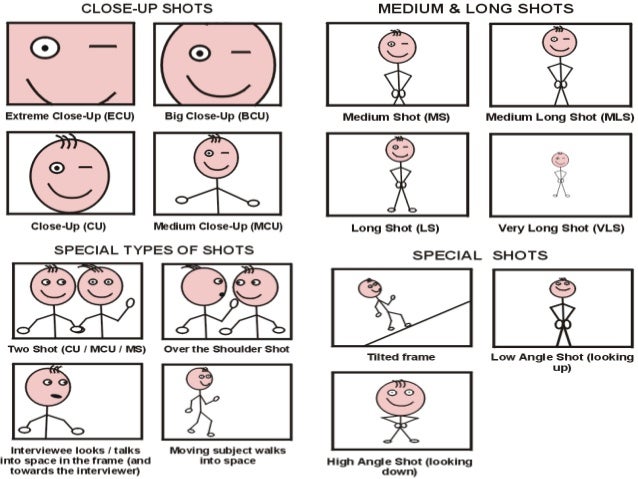
Cinematic styling- the types of shots 
Wide shots in the opening scenes
The variety of shots
Undivided loyalty scene where there is a high up shot representing Frank as dominant compared to Russo.
Close up shots


-Lighting and editing (dull and unsaturated)
Low key lightning 
Links to the conventions of a drama
Stock motion
Story lines

-Complex narratives (multi-stranded) (Barthes) 
different stories of characters
Frank`s story
Zoe`s story
Claire`s story
Russo & Christina`s story

-Composed music  
Jeff Beal

Long form TV Drama
(genre) conventions

Drama that runs in a series
They start with an intense beginning to grip their audience
They contain cliffhangers to maintain interest
They conclude the episode until the end where they conclude the episode.
Very much dialogue led.
Production values are higher than TV drama (funded by subscribers)
High budgets permit high end actors and high end production

Long form TV is an American concept which effectively is a hybrid of a serialised drama with the high
production standards of film.


Ideology

“A set of beliefs values and assumptions shared by a
social group and embedded in social, cultural, political
and economic institutions.”
Usually thought to reflect the interests of powerful groups.

Individualism: e.g. focusing a drama on an individual protagonist, people putting their self interests at first place (Frank) (Frank and his monologues) (Peter Russo) 
Consumerism: e.g. judging characters on their possessions or desirability of their lifestyles (two balls)
Patriarchal: power and the challenge to this by feminism e.g. using or refusing to use women’s bodies as objects, or narratives that present a male, female or gender neutral perspective (When Zoe Barnes goes to Frank`s home)
Racism and ethnocentrism and the challenge to those from multiculturalism and internationalism, e.g. narratives that present a monocultural, multicultural or minority perspective (Few representations of black people) (end of the episode) (white middle class people mostly) (power concentrated on white middle class males- Frank in this case)


Media Theories 


Stereotypes: Politicians are stereoypically represented as power and moeny hungry, mostly focusing on the dominant middle class males. 
Stereotypically in this household the male- Francis is the dominant and a politician whereas Claire is running a charity. 
Claire is an intelligent women and in the opening scene she argues with Frank which shows that she tries to break the stereotype of women being repressed and under the dominance of the male. Also, she has short hair which challenges and breaks the stereotype of females always having long hair. 
Zoe is a stereotypical ambitious young journalist who makes many sacrifices in order to progress and make a name for herself. 
Vasquez breaks the stereotype of weaknesses of women

Stereotypes of men: Frank conforms to the masculine stereotypes of power and intellectual strength
Russo shows that attractiveness does not have to be sexual only. He portrays that he is attractive due to his possessions, power and money.
Counterstereotype of the independence of Frank as he is quite dependent on his wife as they work together and he has to always inform her of what is going on on his political career. 
Stereotypes of Women: Zoe wearing a short dress and Frank is caught looking at her bum, having a photo to proove that.
Uses her sexuality to progress, by wearing a see through top.  

Feminist theory- Van Zoonen: Zoe was expected to have slept whit someone in order to have got the information she got, showing the patriarchal expectations of the society. 
Russo using his power and money in order to attract women- Christina


Feminist theory- bel Hooks: Concept of `intersectionality` that intersections of gender, race, class
and sexuality create a `white
supremacist capitalist patriarchy` whose ideologies dominate the media representation.
In the House of Cards  the powerful figures are white, male, middle class linking to the patriarchy.
Vasquez


Representations of characters 

Russo: Irresponsible. putting his personal life over the proffesional showing individualism because he seems to spend time more on the social aspect of his life rather than his career life and duties he got in the politics, seen through the drink driving and taking of drugs and the troubles he get in. in general. 
Irresponsible- as he thinks he can get away with serious things easily eg. when he gets caught by the police and when he`s in the car with his girlfriend he just tells her `everything will be fine` however he does not realise the seriousness of these matters. 

Frank: Monologues showing his individualism. He is seen as being dominated by his wife Claire Russo in episode 1 as she gets angry at him for not telling her about his decision therefore showing that she usually assists him with taking the decisions, in his political side of life.


Zoe: Uses sexuality to help her succeed therefore portrays that she confroms to the theory of Van Zoonen about the objectification of women, and how they use their sexuality to help them seduce men and succeed.
progressive and ambitious

Claire: Breaks patriarchy and therefore goes against the theory of bell hooks and the patriarchal oppression of women. This can be seen as she is a protagonist and a leader, also assisting Francis woth his political decisions. Alos, she goes against the theory of Van Zoonen as she prefers to use her skills and knowledge to succeed and progress in her career rather than using her sexuality and being objectified.

https://www.theatlantic.com/politics/archive/2014/02/feminism-depravity-and-power-in-em-house-of-cards-em/283960/


Todorov`s theory: Todorov`s theory is about having an `equillibrium`
Equillibrium- everyone happy, peaceful, balance, 
Disequillibrium- when the person is proven wrong and something goes wrong
Back to equillibrium- tries to get back to the original position
Example: Frank`s situation as a politician
the equilibrium,
disequilibrium,
acknowledgement,
solving
equilibrium again

Levi Strauss theory: The idea of binary opposition
Narrative was ruled by structure of opposing terms such as male/female, good/evil. 

House of Cards
Washington vs The street
Cynical ambition vs Authenticity
Power/money vs Service

Intertextuality


Image result for frank in house of cards
Showing Frank as roughtless due to the blood on his hands


Micro elements:
Cinematography- camera work, angel, composition
Sound
Editing- special effects
Mise en Scene- whats in the scene? costume, body language and lightning, facial expression, colour, props, make up, body language movement 


Shot composition


Related image


Sound
Diegetic and non diegetic 

Editing 
The stage in the film-making process in which sound and images are organised to construct an overall narrative.
It is how a film maker puts together and considers cuts/cutting and applies transitions, special effects etc. to communicate a narrative to an audience.

Remember that an audience is a non-active participant who must understand a narrative through the editing, they can only see what you show them.


Imagine a film or even a scene from a film without any editing, it would be very interesting!


Cross cutting

Apply theory/academic arguments showing how the characters are represented.
Discuss the underlying ideologies which apply to the House of cards and the characters
Identify specific examples (of media language) which support your arguments

Use appropriate terminologies in discussing the media language 


Wednesday, 27 March 2019

House of Cards- 27/03/2019

House of Cards
(focusing on 1 episode, episode 1 )


media language: how the media through their forms, codes, conventions and techniques communicate meanings. (LIAR) (language, industry, audience, representation) 
media representations: how the media portray events, issues, individuals and social groups.
media industries: how the media industries’ processes of production, distribution and circulation affect media forms and platforms.
media audiences: how media forms target, reach and address audiences, how audiences interpret and respond to them and how members of audiences become producers themselves.
Drama:  TV drama is a broad genre. At its simplest, it is fictionalised action in narrative form.

Long form TV drama: Long Form Drama is a term coined to describe the recent shift of interest towards television series of high quality that many consider to have replaced the cinema as a locus of serious adult entertainment. Unfolding over multiple episodes, hours, and even years, these TV shows are seen to provide a content, often dark and difficult, and an innovative style that strain against the conventions of cinema as well as network television.
Media convention:  A code is a system of signs which can be decoded to create meaning.In media texts, we look at a range of different signs that can be loosely grouped into the following:technical codes - all to do with the way a text is technically constructed - camera angles, framing, typography etc. verbal codes ...
In other words, media conventions are rules or generally accepted ways of constructing form and informing meaning in media products including story principles, form and structure, generic structures, character and story arcs, cause and effect, point of view, the structuring of time, elements of page layout, paper stock for print, titles and credits sequences, hyperlinking and mounting and framing of images.

A way in which something is usually done. Something you as an audience would expect to see from a specific genre of a media text/tv or film. Eg. in an action movie there would be violence & crime shown.

Semiotics- how the audience interprets signs and symbols. However, two different people watching the same media text, having two different interpretations due to different understandings. It relies on the previous experience of the people therefore the different experiences of audiences will result in them forming different interpretations of the same production. 

Genre: A genre is basically the category of any type of art or literature, for example categories of movie would be comedy, horror, thriller etc.
Genre Hybridity: Some media texts are hybrid genres, which means they share the conventions of more than one genre. For example Dr. Who is a sci-fi action-adventure drama and Strictly Come Dancing is a talent, reality and entertainment show.
verbal codes ...
Synopsis: A brief summary of the major points of a written work.

Codes

A code is a system of signs which can be decoded to create meaning  (system of signs which create meaning)
In media texts, we look at a range of different signs that can be loosely grouped into the following:

  • technical codes- all to do with the way a text is technically constructed (camera work, camera angels, framing,  typography) where filmakers use equipment such as camera, or lighting to create a meaning. (shaking the camera to show an earthquake, show the audience that there is an earhtquake. 
  • verbal codes- everything to do with language, either written or spoken.
  • symbolic codes - codes that can be decoded on a mainly connotational level. Symbolic codes show what is beneath the surface of what we see. For example, a character`s actions show you how a character is feeling. (something that has a meaning attached to it, show a meaning to the audience)
Barthes` Narrative Codes

Narratives like a ball of string

Open or closed?
texts may be
' open ' (i.e. unravelled in a lot of different ways) or
' closed ' (there is only one obvious thread to pull on).
Barthes also decided that the threads that you pull on to try and unravel meaning are called narrative codes and that they could be categorised in the following five ways:

Barthes` Enigma Code 
Narrative Story
5 codes:
- Enigma Code
- Action Code
- Semantic Code
- Symbolic Code
- Referential Code

Enigma Code- The Hermeneutic Code refers to any element of the story that is not fully explained and hence becomes a mystery to the reader.
The purpose of the author in this is typically to keep the audience guessing, arresting the enigma, until the final scenes when all is revealed and all loose ends are tied off and closure is achieved.
Action Code- The Proairetic Code also builds tension, referring to any other action or event that indicates something else is going to happen, and which hence gets the reader guessing as to what will happen next.

          Action code - applies to any action that implies a further narrative action. For example, a gunslinger draws his gun on an adversary and we wonder what the resolution of this action will be. 

          Semantic code- this code refers to connotation within the story that gives additional meaning over the basic denotative meaning of the world. It is any element in a text that suggests a particular, often additional meaning. 


Main characters:
Frank Underwood- protagonist
Claire Underwood- partner of Frank 
Zoe Barnes- Journalist

Analysis of Episode 1 

Frank gets promised he will become the secretary of state, however he had to stay in Congress

Editing:
- Lots of music
- Juxtaposition of scenes:
Politics scene shown and then switches onto a scene where the trash is shown
In the beginning it opens up with Frank`s dog being runned over which is quite sad however the scene that it was followed up by is the politics scene- meeting which changes the mood. 


Mise en scene:
- Dark and dull mise en scene

Camera work:


Sound:
- Start is quite dramatic 
- Sound in the opening builds up suspension and tension, making the opening effective and exciting


Lightining: 
- Dark in the opening 
- Unsaturated colours in the lightning and atmosphere 
- Dark and dingy links to the dirty work and the fact that the genre is a drama


Representation of characters & PLOT
- Frank- speaks quite seriously throughout however includes humour as well
- Zoe: unrecognised character in the beginning and shown as being ignored by the other characters. However her progress is shown as she reaches to Frank and begins working for&with him. 
- Claire: Language used by Claire is quite formal suggesting she comes and is from a middle class background also emphasised by her clothing.
- Tesnsion is built up when Claire sees in their home.
- In the opening Frank- the protagonist is shown as an unsympathetic, ruthless and quite strong person. 
- Christina, secretary to politician Peter Russo. 
- Peter Russo- errend boy (dirty work to be done by Peter Russo)
Blackmailed by Frank, because he`s had:
- drugs
- solicitation
- driving under the influence of alcohol
Zoe is using her sexuality to seduce Frank. 
Doug fishes out education bill to and then gives it to Zoe.

Synopsis of House of Cards

The `House of Cards` is a television political drama series set in present-day Washington, America. The political thriller novel was written by the British author Michael Dobbs, however the television adaptation was written by Andrew Davies. 
The House of Cards is the story of the protagonist Francis Underwood, an ambitious Democrat from South Carolina`s 5th congressional district. He helped to ensure the election of President Garrett Walker, who promised to appoint him as Secretary of State, however the Chief of Staff Linda Vasquez announces that Walker will instead nominate Senator Michael Kern. Linda therefore informs Frank that their administration requires his help from within the House of Representatives, starting with working on an education reform bill with Representative Donald Blythe. Furious at the betrayal of Frank, him and his wife- Claire Underwood make a pact to destroy Walker, starting with Kern. 
When the troubled Representative Peter Russo (who has a history of drug and alcohol abuse) is arrested for drink driving with Rchel Posner, a prostitute, in his car, Frank offers him a reprieve in exchange for his loyalty, covering up the incident by bribing the police commissioner. 

Frank then encounters Zoe Barnes, a younh political reporter to the Washington Herald newspaper. The two come to an agreement in which Frank will leak inside information to incriminate his political opponents while Zoe advances her career by publishing this information. Frank therefore leaks a copy of the first draft of Donald Blythe`s education bill, which proposes massive increases in governement control of education, promptly causing a scandal on the very first day after the Presidential inauguration.
What are the genre conventions of a thriller?

Thriller is a broad genre of literature, film and television, having numerous, often overlapping subgenres. Thrillers are characterized and defined by the moods they elicit, giving viewers heightened feelings of suspense, excitement, surprise, anticipation and anxiety, which are the main elements used. However, it also includes sub genres such as political which directly links to the House of Cards as The House of Cards is a political drama/thriller. Thrillers are also associated with violence and crime which can be seen in Episode 1 of the House of Cards when the protagonist Frank throws the table on the floor which shows he was frustrated at what has happened- that he didn`t get nominated for becoming the Secretary of State but, Senator Michael Kern did. And lastly, the mise en scene of a thriller is dull with unsaturated colours which can be seen throughout the whole episode 1 in the House of Cards. 
What are the genre conventions of a political thriller?

A political thriller is a thriller that is set against the backdrop of a political power struggle. They usually involve legal plots, designed to give political power to enemy, while protagonist has to try to stop the enemy. They can involve national or international political scenarios. The common themes are: political corruption, terrorism, and warfare. Political thrillers can be based on true facts such as the assassination of John F Kennedy. In political thrillers there is usually a strong overlap with the conspiracy thriller.
What are the genre conventions of a political drama? (genre hybridity)

Political dramas, mirror interactions that affect the whole world. We get a glimpse into the fact that much of our fate is determined by people who have the same demons as us, meaning that they are both fallible and relatable. In short, this is the combination that perfectly grabs our attention and refuses to let go.Therefore through these dramas, we learn that politicians go through the same range of emotions as anyone else. In fact, it is really up to the writers to determine the range of emotions explored and shown through the conventions and codes. The impact that this genre has on its audience is that it encourages its audience to take up an action of struggle against a presented inustice or to ally with a particular viewpoint. 
Neales Theory 
Steve Neale’s theory of Repetition and Difference.
Steve Neale states that genres all contain instances of repetition and difference, difference is essential to the to the economy of the genre, as the audience does not want to see the same plots but different, exciting and unique plots. 
Neale states that the film and it’s genre is defined by two things:
How much is conforms to its genre’s individual conventions and stereotypes. A film must match the genre’s conventions to be identified as part of that genre. (repetition) 

How much a film subverts the genre’s conventions and stereotypes. The film must subvert convention enough to be considered unique and not just a clone of an existing film. (difference/ different). 
Relationship/ link to the House of Cards

As the House of Cards is classified as having the genre of a political thriller it very much conforms to the genre`s individual conventions and stereotypes, so it can be easily identified as part of this genre. This is clearly shown as the conventions of a political thriller which can be seen right in the first episode of the House of Cards where a political power is tried to be given to the enemy in our case Michael Kern and therefore his opponents try to stop him- Frank Underwood. Also another convention of this genre identified in the House of Cards is the political corruption between the protagonist Frank and Peter Russo where Frank corrupts the police commissioner to let Peter Russo out after he was arrested for drink driving, however he does this favour to Russo only because he would get loyalty back from him in exchange. Also the political thriller- House of Crads is to some extent linked to true/real events- Margret Thatcher which is a very typical convention for a political thriller. And lastly, the technical codes used in the political thriller such as camera work & lightning conform very much as for example the lightning is quite dark and the mise en scene throughout the whole episode one is with unsaturated colours portraying the atmosphere as being negative and dull. 
However, on the other hand the House of Cards also subverts the genre`s convetions and stereoypes by 

Ideology